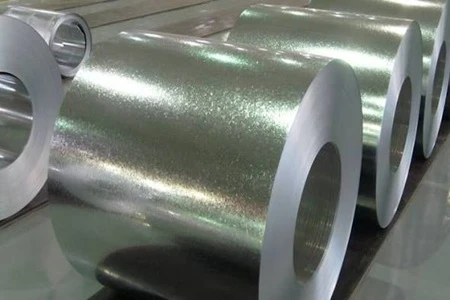
I. Commercial-Grade Substrates for General Forming: DX51D+Z (Equivalent to SGCC, CS Type B)
II. Stamping-Grade Substrates: DX52D+Z, DX53D+Z, and DX54D+Z (Equivalent to SGCD1/2/3)
Suitable Applications: Processes requiring bending, stretching, or deep drawing. These substrates demand high elongation and are intended for applications with minimal load-bearing requirements, where the primary objective is to ensure the material does not crack during the stamping or forming process. Typical use cases include home appliance casings, electrical distribution enclosures, stamped hardware components, complex decorative elements, and parts requiring multiple drawing stages. DX52D is suitable for moderate forming, while DX53D and DX54D offer progressively higher elongation, making them ideal for complex deep-drawing operations. These substrates are less common in the construction materials sector and are primarily supplied to manufacturers of hardware and home appliances. For customers operating sheet metal stamping facilities, if standard DX51D grade material cracks during the stamping process, upgrading to a "forming-grade" substrate is an effective solution. Limitations: It has relatively low strength and a higher price point than DX51D; therefore, it is not suitable for load-bearing structural components.
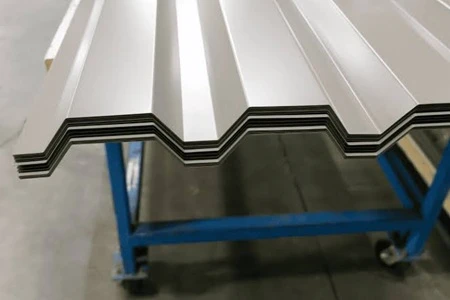
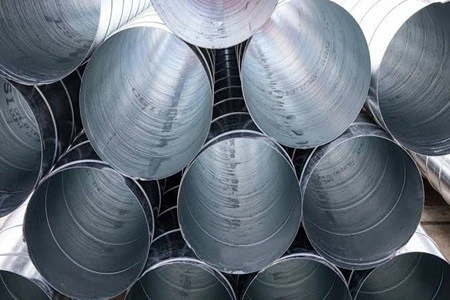

III. High-Strength Structural Substrates (S-Series): S220GD+Z, S250GD+Z, S280GD+Z
Suitable for: Applications requiring a balance between formability and structural load-bearing capacity. These grades can withstand moderate loads and wind pressure, are suitable for roll-forming into C-section or Z-section purlins, and can undergo standard bending/forming processes. Typical applications include secondary purlins for light-steel industrial buildings, roof bracing, standard photovoltaic (PV) mounting structures, door frames, and profiles for rolling shutter doors. Notably, S250GD+Z (equivalent to SGC400) is a highly popular grade among purlin manufacturers in Southeast Asia; it offers moderate strength, minimal springback during C-purlin roll-forming, and a forgiving processing window-making it a frequently requested substrate by steel structure fabricators in Sri Lanka. For projects in coastal areas, it is often paired with a heavy zinc coating to provide both structural strength and corrosion resistance.
IV. High-Strength Structural Substrates: S320GD+Z, S350GD+Z (equivalent to SGC490, SGC570)
Suitable for: Environments subject to high loads, strong wind pressure, or heavy snow accumulation, where strict requirements exist for component rigidity and resistance to deformation. These grades allow for simple bending/forming, though they have lower elongation requirements. Typical applications include primary purlins for light-steel industrial buildings, load-bearing components for long-span roofs, primary PV mounting structures, substrates for composite floor decking, and frameworks for heavy-duty shelving. With a yield strength of ≥350 MPa, S350GD+Z offers significantly superior resistance to wind pressure and deformation compared to DX51D, making it well-suited for steel structure projects in coastal areas of Sri Lanka that experience high wind speeds. Limitations: The material is relatively rigid with reduced elongation; the bending radius cannot be too small, as excessive bending may cause the coating to crack or the substrate to fracture. Processing techniques must be adjusted accordingly, and the material is unsuitable for complex, multi-stage forming processes.
V. Ultra-High-Strength Substrate (S550GD+Z)
Applicable conditions: Extremely high loads, lightweight design requirements, and the need to minimize component cross-sectional thickness. Suitable only for simple bending; virtually incapable of being deep-drawn or stretched. Typical applications: High-strength stiffeners and heavy-duty fixed supports. Limitations: Poor formability; places high demands on processing equipment and bending techniques. It is generally difficult to process using standard equipment found in typical roll-forming (metal roofing/cladding) plants and is rarely specified for conventional construction material projects.