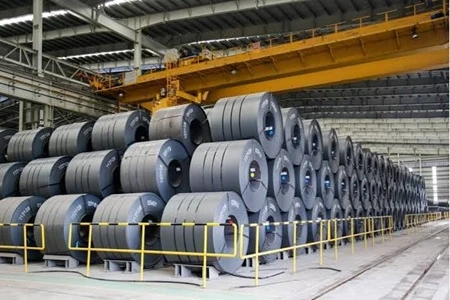
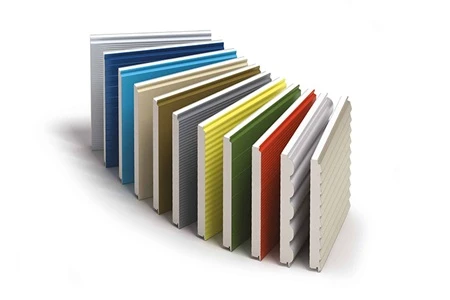
I. What is PPGL (Pre-painted Galvalume Steel Coil)?
PPGL refers to pre-painted steel coils produced using a Galvalume substrate-a steel sheet coated with an alloy of 55% aluminum, 43% zinc, and 1.6% silicon. The manufacturing process involves surface passivation, chemical pre-treatment, the application of primer and topcoat via roller coating, and continuous baking and curing.
PPGI: Uses a pure hot-dip galvanized (zinc-coated) substrate.
PPGL: Uses a 55% aluminum-zinc alloy (Aluzinc/Galvalume) substrate.
The aluminum component forms a dense protective film, while the zinc provides sacrificial anodic protection. This dual-protection mechanism offers significantly superior corrosion resistance compared to PPGI (with an equivalent coating weight) in environments characterized by high humidity, salt spray, or intense heat and sun exposure.
II. Key Performance Advantages
High Solar Reflectivity: The Galvalume substrate is inherently highly reflective. When combined with a high-reflectivity PE (polyester) coating, it helps lower internal temperatures in industrial facilities, thereby reducing energy consumption for ventilation and cooling.
Weather Resistance and Color Stability: Standard PE (polyester) coatings offer the best cost-performance ratio. For applications involving long-term sun exposure or strict requirements regarding color retention-such as commercial showrooms-high-durability polyester (HDP) or polyvinylidene fluoride (PVDF) coatings are available.
Excellent Formability: Suitable for roll-forming into corrugated sheets, wall panels, and purlin liners. It is well-suited for continuous roll-forming production lines used in Pre-Engineered Building (PEB) construction, offering stable performance during bending (including T-bend tests) without the coating cracking or peeling.
Lightweight and Rapid Installation: As part of a PEB building envelope system, its low self-weight helps shorten on-site construction timelines.
III. Selection Guide for Common Coating Systems
PVDF (Fluorocarbon) Coating: Provides the highest level of weather resistance. While higher in cost, it is the best choice for high-end projects or coastal areas with intense salt-spray exposure, offering the longest color-retention lifespan.
IV. Application Scenarios for PEB (Pre-Engineered Building) Projects
Industrial: PEB factory buildings, logistics warehouses, and exterior walls/roofing for cold storage facilities.
Agricultural: Poultry sheds and farm storage structures.
Commercial: Automotive showrooms, supermarkets, and roofing/wall cladding for temporary venues.
Ancillary Components: Facing sheets for sandwich panels, downpipes, and base materials for trim and corner flashings.
V. Best Practices for Storage, Transport, and Processing
Steel coils must be kept dry and well-ventilated; exposure to rain or seawater must be strictly avoided. Moisture can lead to "white rust" (distinct from red rust, but it negatively impacts both appearance and coating adhesion).
During roll-forming, ensure that tools and rollers are clean to prevent scratching the paint film. Maintain a bending radius that strictly complies with the material's specified T-bend rating.
Cut edges and drilled holes are vulnerable points; use appropriate sealants and touch-up paint during installation to ensure adequate protection.
Each shipment includes an MTC (Mill Test Certificate), which details the coating weight, coating type, BMT/TCT (Base Metal Thickness/Total Coated Thickness), and mechanical properties-ensuring compliance with local project inspection and acceptance standards.