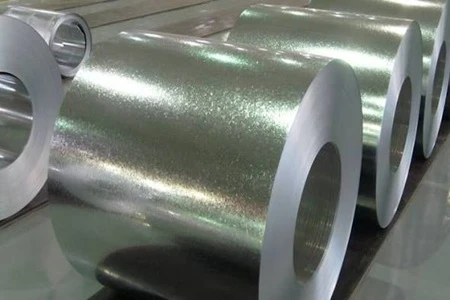
For buyers researching 1 4 Rolled Steel, understanding the conversion is only the first step. A successful material specification also needs to account for the steel grade, product form, dimensional tolerances, and the conditions the finished component must withstand.
1. Exact Thickness and Weight of 1/4-Inch Steel
One inch equals 25.4 millimeters, so the conversion is:
0.25 × 25.4 = 6.35 mm
The nominal thickness is therefore 6.35 mm. The measured thickness of supplied material may differ within the tolerance allowed by the applicable specification and purchase agreement. This distinction is particularly important when the material will be machined or assembled with components that require controlled dimensions.
Steel weight can be estimated using a reference density of 7,850 kg/m³. For a plate with a nominal thickness of 6.35 mm, the theoretical mass per square meter is:
0.00635 m × 7,850 kg/m³ = 49.85 kg/m²
The following table compares common thicknesses using the same density assumption.
| Nominal thickness | Metric equivalent | Theoretical mass per m² | Mass per 100 m² |
|---|---|---|---|
| 3/16 in | 4.7625 mm | 37.38 kg | 3,738 kg |
| 1/4 in | 6.35 mm | 49.85 kg | 4,985 kg |
| 5/16 in | 7.9375 mm | 62.31 kg | 6,231 kg |
| 3/8 in | 9.525 mm | 74.81 kg | 7,481 kg |
| 1/2 in | 12.7 mm | 99.70 kg | 9,970 kg |
These are theoretical estimates, not guaranteed shipment weights. Actual mass depends on delivered dimensions, applicable tolerances, and weighing methods.
For a rectangular plate measuring 1,000 × 2,000 mm, the surface area is 2 m². At 1/4-inch nominal thickness, its estimated steel mass is approximately 99.7 kg. Ten plates of the same dimensions would have a combined theoretical mass of approximately 997 kg before packaging.
This calculation helps purchasing teams estimate raw-material requirements and freight. It does not include cutting losses, offcuts, or the weight of attached components.
2. Is 1/4-Inch Steel the Same as 6 mm Steel?
No. One-quarter inch equals 6.35 mm, which is 0.35 mm thicker than 6.00 mm steel.
That difference may be relevant when a drawing specifies a particular nominal dimension or when multiple components must fit together. Using the same reference density, 6.00 mm steel has a theoretical mass of approximately 47.10 kg/m², compared with 49.85 kg/m² for 6.35 mm material.
| Nominal thickness | Theoretical mass per m² | Difference from 6.35 mm |
|---|---|---|
| 6.00 mm | 47.10 kg | −2.75 kg |
| 6.35 mm | 49.85 kg | Reference |
| 6.50 mm | 51.03 kg | +1.18 kg |
The difference between 6.00 mm and 6.35 mm steel is approximately 5.8% by theoretical mass per unit area. For a large production order, this can affect estimated material consumption.
However, nominal thicknesses should not be substituted automatically. The permitted tolerances, specified material standard, and component drawing determine whether an alternative dimension is acceptable.
3. How Does 1/4-Inch Steel Compare with 3/16-Inch and 5/16-Inch Steel?
Thickness selection involves more than comparing weight. A thinner plate may reduce material consumption, while a thicker plate may help satisfy a component's stiffness or local strength requirements. The actual outcome depends on the design.
At equal surface area, 1/4-inch steel has approximately 33.3% more theoretical mass than 3/16-inch steel. It has approximately 20% less mass than 5/16-inch steel.
For example, across 100 m², the estimated mass difference between 3/16-inch and 1/4-inch steel is approximately 1,247 kg. That difference can influence material budgeting and handling requirements.
The engineering comparison is more complex. For a simple, uniform, rectangular beam under specified conditions, bending stiffness is related to the second moment of area. For a rectangular cross-section, this property varies with the cube of the section depth about the relevant bending axis. Consequently, increasing thickness can have a substantial effect on stiffness in some configurations.
That relationship should not be applied indiscriminately to every plate or bracket. Support conditions, geometry, loading direction, connection details, and material properties all matter. A flat panel, a ribbed bracket, and a bolted support plate do not behave identically.
The practical lesson is to use weight tables for material estimates and engineering calculations for structural decisions.
4. Where Is 6.35 mm Steel Used in Fabrication?
The following are examples of components for which fabricators may evaluate 1/4-inch material. They are not universal thickness recommendations; final suitability depends on the component design and operating conditions.
Conveyor motor mounting plates
A motor mounting plate connects a drive motor to a conveyor frame or adjustment assembly. Important considerations include mounting-hole spacing, bolt loads, vibration, and deflection under operating loads.
If the plate is too flexible for the assembly's requirements, motor alignment may be affected. The support arrangement and plate geometry therefore need to be evaluated alongside nominal thickness.
Gearbox and bearing support brackets
Gearbox brackets and bearing support plates may carry concentrated loads around fasteners and mounting surfaces. Hole position, edge distance, local stresses, and flatness can all affect fabrication quality.
Where machining follows cutting, the original blank may need an allowance for material removal. The drawing should distinguish between the raw blank dimensions and the required finished dimensions.
Agricultural machinery connection plates
Cultivator frame connectors, seed-drill brackets, and tractor-implement mounting components are examples of fabricated agricultural parts. Depending on the machine, they may experience repeated loading, impact, moisture, and outdoor corrosion.
Material grade, welding procedure, connection design, and protective coating should be considered together. A bracket for a cover or accessory should not be treated as equivalent to a load-bearing implement connection.
Trailer accessory brackets and equipment supports
Tool-box mounting plates, mudguard supports, and auxiliary-equipment brackets are possible applications in trailer fabrication. The attached equipment's weight, vibration during travel, fastening arrangement, and exposure to water or road contaminants influence the design.
These examples should be distinguished from safety-critical chassis, suspension, and towing components, which require their own engineering assessment.
Pump mounting plates
Pump support plates and equipment bases may need controlled flatness and mounting-hole locations to support installation and alignment. If the plate will be machined, welded, or coated, those operations should be considered before the final dimensions and material condition are specified.
Across these applications, thickness provides a starting dimension-not proof of load capacity or suitability.
5. Which Steel Grade and ASTM Specification Should Be Considered?
A steel grade and a product specification serve different purposes. The grade identifies defined material properties and requirements, while the product specification establishes the applicable rules for the covered steel product.
| Specification | General scope | Purchasing consideration |
|---|---|---|
| ASTM A36/A36M | Carbon structural steel shapes, plates, and bars | Confirm the required grade, product form, and applicable requirements. |
| ASTM A572/A572M | High-strength low-alloy structural steel | Confirm the specified grade and whether its properties suit the design. |
| ASTM A1011/A1011M | Covered hot-rolled sheet and strip in coils and cut lengths | Check the applicable designation, dimensions, and product form. |
| ASTM A1018/A1018M | Covered heavy-thickness hot-rolled sheet and strip supplied in coils | Verify that the ordered coil and dimensions fall within the specification's scope. |
These specifications are not interchangeable. ASTM A36/A36M and A572/A572M address structural steel products, while A1011/A1011M and A1018/A1018M cover specified categories of hot-rolled sheet and strip.
For example, ASTM lists A1011/A1011M-25 as an active edition covering specified hot-rolled sheet and strip in coils and cut lengths. ASTM A1018/A1018M addresses heavy-thickness hot-rolled products supplied in coils. The correct choice depends on the actual product and its specified requirements. See the official ASTM A1011/A1011M page and ASTM A1018/A1018M page.
When a project specifies structural plate, buyers should verify the applicable material specification rather than assume that a sheet-and-strip specification covers the product. The current edition, dimensional scope, grade, and required inspection documentation should be confirmed before ordering.
6. Steel Plate, Coil, or Cut-to-Length Material?
The product form should match the manufacturing process.
Steel plate: Often considered for individual blanks, brackets, support plates, and components requiring cutting, drilling, welding, or machining.
Hot-rolled coil: May suit continuous processing, slitting, leveling, and automated blanking where the required dimensions and specification are available in coil form.
Cut-to-length material: Supplied in specified lengths and may reduce some downstream cutting work, depending on the part dimensions and processing arrangement.
For a manufacturer producing many identical mounting plates, the choice between purchasing individual plates and processing coil can affect material yield, handling, and production workflow. Coil processing may be efficient for suitable high-volume operations, while individual plate blanks may better match smaller batches or larger components.
The best option depends on equipment, order quantity, required tolerances, material availability, and processing costs-not simply on thickness.
7. What Should Be Verified Before Fabrication?
A technically useful steel specification should identify the nominal thickness, grade, applicable standard, product form, dimensions, and required tolerances. It should also state any relevant requirements for surface condition, cutting, machining, welding, and inspection records.
For laser or plasma cutting, the kerf and blank layout influence finished dimensions and material yield. For bending, formability, bend radius, tooling, and material direction may matter. For welded components, the grade, joint design, and suitable welding procedure need to be considered together.
Inspection requirements should reflect the purchase specification and the finished part's function. Depending on the order, they may include dimensional checks, visual inspection, material identification, or agreed material test documentation.
The distinction between theoretical and actual weight should also be clear in quotations and shipping records. This helps purchasing teams reconcile estimates with delivered quantities.
Conclusion
A 1/4-inch steel plate is nominally 0.25 inches (6.35 mm) thick, with a theoretical mass of approximately 49.85 kg/m² at a reference density of 7,850 kg/m³.
For buyers considering 1 4 Rolled Steel, the most useful decision combines this dimensional information with the intended component, material grade, product form, fabrication route, and applicable specification. Conveyor mounting plates, machinery brackets, agricultural connections, and equipment supports illustrate how different parts can have different requirements even when their nominal thickness is the same.
Accurate thickness conversion and weight calculations provide a sound basis for estimating material use. Verified specifications and application-specific engineering checks then help ensure that the selected product matches the requirements of the finished component.
Technical references
ASTM A36/A36M - Carbon Structural Steel
ASTM A1011/A1011M-25 - Hot-Rolled Sheet and Strip
ASTM A1018/A1018M-23 - Heavy-Thickness Hot-Rolled Coils