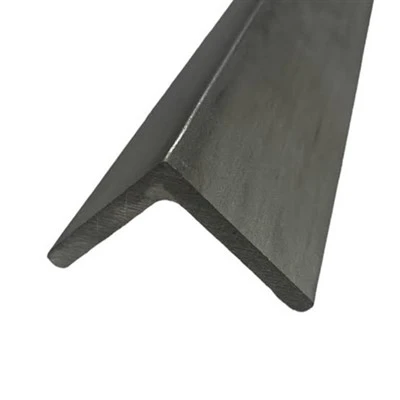
Industrial Stainless & Alloy Steel Stock, Processing & Mill-Direct Supply
Industrial raw materials require precise metallurgical alignment, verifiable batch traceability, and strict dimensional tolerances. We supply commercial and engineering-grade stainless steel and alloy steel products tailored for high-pressure, elevated-temperature, and corrosive operating environments.
By maintaining direct partnerships with tier-1 mills, we provide mill-test-certified stock in standard stock lengths or precision pre-machined conditions. This guide outlines available material forms, technical specifications, metallurgical standards, and quality verification frameworks to assist engineering and procurement teams in material selection and sourcing.
-
![Chromium Molybdenum Steel Plate]() Chromium Molybdenum Steel PlateChromium Molybdenum (Cr-Mo) steel plate is a low-alloy structural steel engineered specifically for high-stress, high-temperature, and corrosive pressure vessel environments.
-
![430 Stainless Steel Sheet]() 430 Stainless Steel Sheet430 stainless steel (UNS S43000 / EN 1.4016) is a non-hardenable ferritic stainless steel containing 16.0%–18.0% chromium with minimal nickel content. It delivers strong atmospheric corrosion
-
![410 Stainless Steel Sheet]() 410 Stainless Steel Sheet410 stainless steel is a hardenable, general-purpose martensitic stainless steel containing 11.5% to 13.5% chromium. Delivered in full-annealed condition, it provides moderate corrosion resistance
-
![904L Stainless Steel Plate]() 904L Stainless Steel Plate904L (UNS N08904 / 1.4539) is a non-stabilized low-carbon high-alloy austenitic stainless steel. Containing 23–28% Nickel, 19–23% Chromium, 4–5% Molybdenum, and 1–2% Copper, it provides superior
-
![Duplex 2205 Stainless Steel Plate]() Duplex 2205 Stainless Steel PlateDuplex 2205 (UNS S31803 / UNS S32205 / EN 1.4462) is a nitrogen-enhanced duplex stainless steel plate featuring an approximate 50/50 dual-phase microstructure of ferrite and austenite.
-
![316L Stainless Steel Sheet]() 316L Stainless Steel Sheet316L (UNS S31603 / EN 1.4404) is a low-carbon austenitic stainless steel alloyed with 2.0% to 3.0% molybdenum. The addition of molybdenum significantly improves resistance to chloride pitting and


Product Range
Our supply capabilities cover major semi-finished and finished steel profiles, available in seamless, welded, hot-rolled, cold-drawn, and forged structural forms:
|
Product Form |
Available Size Range |
Manufacturing Methods |
Surface Finish Conditions |
|
Seamless & Welded Pipes / Tubes |
OD 6 mm - 1219 mm (1/8" to 48") WT 0.5 mm - 60 mm (SCH 5S to SCH 160 / XXS) |
Cold Drawn, Cold Rolled, Seamless Extruded, EFW, LSAW, SSAW |
Annealed & Pickled (AP), Bright Annealed (BA), Mechanically Polished (180-800 Grit), Electropolished (EP) |
|
Plates, Sheets & Coils |
Thickness: 0.3 mm - 200 mm Width: 1000 mm - 3000 mm |
Hot Rolled (HR), Cold Rolled (CR), Plasma / Laser Cut |
No.1, 2B, No.4, Hairline, Mirror (8K), Checkered / Embossed |
|
Round, Square & Hex Bars |
Diameter / Size: 3 mm - 800 mm |
Hot Rolled, Forged, Cold Drawn, Centerless Ground |
Bright Drawn, Turned, Peeled, Rough Machined, Polished (h8-h11 tolerance) |
|
Structural Profiles (Angles, Channels, Beams) |
Web/Flange: 20 mm - 600 mm Length: Up to 12 meters standard |
Hot Extruded, Laser Welded, Hot Rolled |
Pickled, Blast Cleaned, Sandblasted |
|
Flanges & Pipe Fittings |
1/2" to 60" (Class 150 lb to 2500 lb / PN6 to PN400) |
Forged, Machined, Butt-Welding, Threaded, Socket-Weld |
RF, FF, RTJ, Smooth Finish, Concentric Serrated |
Key Product Characteristics

Corrosion Resistance: Austenitic grades (300 series) and Duplex steels utilize elevated chromium (16%-28%) and nickel (3.5%-28%) contents, supplemented by molybdenum (up to 7%), to form a self-healing Cr2O3 passive layer resistant to general atmospheric oxidation, organic acids, and chloride pitting.
High-Temperature Stability & Creep Resistance: Chromium-molybdenum alloy steels (e.g., P91, 4140) and high-nickel stainless grades (310S, 321) retain yield strength and resist scaling under continuous operating temperatures exceeding 550°C to 1150°C.
Mechanical Strength & Wear Resistance: Martensitic stainless steels (400 series) and low-alloy structural steels respond to Quench & Temper (Q&T) thermal processing, achieving yield strengths from 550 MPa to over 1100 MPa for high-stress shafting, gears, and wear plates.
Fabrication & Machinability: Low-carbon variants (L-grades, e.g., 304L, 316L) prevent intergranular chromium-carbide precipitation during welding. Sulfur-alloyed free-machining grades (e.g., 303, 416) reduce tool wear during automated CNC turning.
Key Specifications
Engineering designs rely on precise dimensional and physical parameters. Standard supply limits include:
Dimensional Tolerances:
- Tubes/Pipes: ASTM A1016 / A999, EN 10216-5 Class D3/T3 or D4/T4.
- Bars: ISO h8, h9, h11, ASTM A484.
- Plates: ASTM A480 / EN 10029 Class B.
Wall Thickness Schedules: SCH 5S, 10S, 40S, 80S, SCH 160, XXS per ASME B36.19M / B36.10M.
Pressure Ratings (Fittings/Flanges): Class 150, 300, 600, 900, 1500, 2500 per ASME B16.5; PN6 to PN100 per EN 1092-1.
Heat Treatment States: Solution Annealed, Bright Annealed (BA), Quenched & Tempered (Q+T), Normalized & Tempered (N+T), Stress Relieved (SR), Soft Annealed.
Surface Roughness (Ra): Internal tube finishes down to Ra <= 0.4 µm (electropolished) or Ra <= 0.8 µm (mechanically polished).

Grades & Standards
Grade & Chemical Standard Reference Matrix
|
Material Category |
Common Grade Designations |
Standard Specifications |
Key Alloying Elements |
Primary Technical Advantage |
|
Austenitic Stainless |
AISI 304/304L (1.4301/1.4307) AISI 316/316L (1.4401/1.4404) |
ASTM A240, ASTM A312, ASTM A276, EN 10088-2 |
18 Cr - 8 Ni (304) 16 Cr - 10 Ni - 2.5 Mo (316) |
General chemical resistance; low-carbon variants prevent weld-zone sensitization. |
|
High-Temp / Acid Austenitic |
AISI 321 (1.4541) AISI 310S (1.4845) 904L (1.4539) |
ASTM A312, ASTM A240, EN 10095 |
Ti addition (321) 25 Cr - 20 Ni (310S) 20 Cr - 25 Ni - 4.5 Mo - 1.5 Cu (904L) |
321 prevents intergranular corrosion up to 800°C; 310S resists oxidation to 1150°C; 904L resists sulfuric acid. |
|
Duplex Stainless |
2205 (UNS S31803/S32205) 2507 (UNS S32750) |
ASTM A789, ASTM A790, ASTM A182 F51/F53 |
22-25 Cr, 5-7 Ni, 3-4 Mo, 0.15-0.27 N |
Yield strength double that of 304/316; high resistance to chloride stress corrosion cracking (PREN >= 35-42). |
|
Martensitic & PH Stainless |
AISI 410, 420 (1.4021) 17-4PH (UNS S17400 / 1.4542) |
ASTM A276, ASTM A564 |
12-14 Cr, 0.15-0.40 C (420) 17 Cr - 4 Ni - 4 Cu - Nb (17-4PH) |
Heat treatable to high hardness (up to 50 HRC); 17-4PH combines high yield strength with good corrosion resistance. |
|
Low-Alloy Engineering Steel |
AISI 4140 (42CrMo4 / 1.7225) AISI 4340 (34CrNiMo6 / 1.6582) |
ASTM A29, EN 10083-3 |
Cr-Mo (4140) Ni-Cr-Mo (4340) |
Excellent hardenability, high fatigue strength, and impact toughness after Q+T heat treatment. |
|
Chrome-Moly Pressure Steel |
ASTM A335 P11, P22, P91 ASTM A182 F11, F22, F91 |
ASTM A335, ASTM A234, ASTM A182 |
1.25-9.0 Cr, 0.5-1.0 Mo, V, Nb (P91) |
Maintains creep rupture strength under elevated pressure and thermal loads up to 600°C. |
Applications

Oil & Gas (Upstream/Downstream): Offshore topside piping, subsea manifolds, heat exchanger tubing, and downhole components using Duplex 2205, Super Duplex 2507, and ASTM A335 P11/P22 alloy pipes.
Chemical & Petrochemical Processing: Process vessels, storage tanks, reactor columns, and fluid lines using 316L, 321, 317L, and 904L to handle organic acids, chloride compounds, and high-temperature gases.
Power Generation & Energy: Boiler superheater tubes, steam headers, turbine shafts, and valve bodies operating under high thermal creep using ASTM A335 P91, P22, and 4140 alloy forgings.
Heavy Machinery, Automotive & Gear Manufacturing: Hydraulic cylinder shafts, drive shafts, heavy-duty gears, and structural pins utilizing cold-finished or Q+T 4140, 4340, 8620, and 17-4PH round bars.
Food, Beverage & Pharmaceutical Equipment: Hygienic process lines, mixing vats, and sanitary fittings using 304, 316L, and electropolished tubing (Ra <= 0.4 µm).
To ensure compliance with global procurement standards, every production lot undergoes systematic non-destructive (NDT) and destructive testing protocol prior to release:
Chemical Verification: Optical Emission Spectrometry (OES) and Positive Material Identification (PMI) XRF handheld testing on 100% of heat lots.
Mechanical Testing: Tensile strength, yield strength, elongation, Charpy V-notch impact testing at ambient or sub-zero cryogenic temperatures, and Brinell/Rockwell hardness verification.
Metallurgical Inspection
Grain size determination (ASTM E112), intergranular corrosion testing (ASTM A262 Practice A/E), micro-cleanliness, and ferrite content measurement (for Duplex grades).
Non-Destructive Testing (NDT)
Hydrostatic pressure testing, Eddy Current testing (ASTM E426), Ultrasonic testing (UT per ASTM A388 / A577), and Radiographic testing (RT) for welded seams.
Certification
Material Test Certificates (MTC) issued fully compliant with EN 10204 3.1 standard, with EN 10204 3.2 available upon request via independent third-party inspection agencies (SGS, TÜV, Bureau Veritas, Lloyd's Register).
Supply & Customization Options
We accommodate exact project bill-of-materials (BOM) requirements through value-added processing and protective export packaging:
Cutting & Machining Services
- Band-saw cutting to tight length tolerances (-0/+3 mm).
- Waterjet, plasma, and high-precision fiber laser cutting for plate profiling.
- End preparation: Beveled ends (ANSI B16.25 for welding), square cut, threads (NPT/BSPT), or custom chamfering.
- Surface treatments: Centerless grinding, turning, mechanical polishing, and passivation.
Packaging & Export Logistics
Pipe protection: Plastic end caps, internal rust-inhibitive oiling, and bundled with woven plastic wrapping.
Bar/Plate protection: Heat-treated ISPM-15 compliant wooden boxes, steel-strapped wooden crates, or seaworthy packaging for containerized / break-bulk sea freight.
Marking & Stenciling: Continuous ink-jet stencil marking along the entire length showing Grade, Standard, Heat Number, Size, and Schedule/Thickness.

What Buyers Should Provide
Including exact technical parameters in your inquiry reduces lead-time and ensures accurate quoting. Please supply the following specifications when requesting pricing:

Material Grade & Standard: E.g., Stainless Steel 316L per ASTM A312 or Alloy Steel 4140 per ASTM A29.
Product Form & Dimensions:
- Pipes/Tubes: Outside Diameter (OD), Wall Thickness (WT / Schedule), and Length (Single Random, Double Random, or Fixed Length).
- Bars: Diameter / Width, Length, and Tolerances (e.g., ISO h9).
- Plates: Thickness, Width, and Length.
Delivery & Heat Treatment Condition: E.g., Solution Annealed & Pickled, Quenched & Tempered (Q+T), or Bright Annealed.
Quantity & Tolerances: Total metric tons, meters, or pieces required, along with acceptable weight/length tolerances.
Inspection & Certification Requirements: Standard EN 10204 3.1 MTC requirement, or any third-party inspection (TPI) mandates (SGS, TÜV) or specific testing standards (e.g., Charpy impact at -40°C, PMI, NACE MR0175 compliance).
Destination & Commercial Terms: Target delivery terms (FOB, CFR, CIF) and destination port.
FAQ

Request a Quote
Submit your product specifications, required quantities, and target delivery timelines directly to our technical sales team for a formal quotation:
Engineering & Sales Desk: sales@tjrsr.com
Technical Support: tech@tjrsr.com
Response Time: Technical quotes and stock availability are confirmed within 24 business hours. Include drawings or detailed specifications for custom-machined or forged items.
As one of the most professional stainless & alloy steel manufacturers and suppliers in China, we also support customized service. Please feel free to wholesale cheap stainless & alloy steel in stock here from our factory. For price consultation, contact us.