(I) Basic Definition and Corrosion Resistance Mechanism
Definition: A special steel based on iron, with added elements such as **chromium (Cr), nickel (Ni), and molybdenum (Mo)**, exhibiting rust resistance in atmospheric/weakly corrosive media and corrosion resistance in acidic and alkaline environments.
Core Mechanism: Chromium reacts with oxygen to form a dense, self-healing Cr₂O₃ passivation film, isolating it from corrosive media; the higher the chromium content, the more stable the passivation film and the stronger the corrosion resistance.
(II) Core Classification (Based on metallographic structure, most commonly used in export)
1. Austenitic Stainless Steel (300 series/200 series, accounting for 70%+ of production)
Composition: Cr 16%–22%, Ni 6%–12% (200 series uses Mn instead of Ni for lower cost).
Properties: Non-magnetic, excellent plasticity, toughness, and weldability; strong corrosion resistance; can be strengthened by cold working, but cannot be hardened by heat treatment.
Representative grades:
304 (18/8): General purpose, 18% Cr + 8% Ni, preferred for food, kitchenware, construction, and home appliances.
316L: Low carbon + 2% Mo, resistant to chloride ions (seawater/salt spray), suitable for chemical, marine, and medical applications.
309S/310S: High Cr-Ni, high temperature resistant (310S up to 1200℃), suitable for furnace tubes and high-temperature equipment.
201/202: Low Ni, high manganese, cost-effective, suitable for decoration, furniture, and low-end kitchenware.
Applications: Food machinery, chemical storage tanks, building curtain walls, elevators, medical devices, and kitchen equipment.
2. Ferritic Stainless Steel (400 series, Ni-free, low cost)
Composition: Cr 12%–30%, Ni-free, contains small amounts of Ti/Nb.
Properties: Magnetic, good atmospheric resistance/oxidation resistance, relatively weak toughness and weldability, prone to intergranular corrosion. Representative grades: 430 (16% Cr, for decoration/home appliances/kitchenware), 409 (low Cr, for automotive exhaust pipes/heat exchangers).
Applications: Interior decoration, appliance housings, gas stoves, automotive exhaust systems.
3. Martensitic Stainless Steel (400 series, hardenable, high strength)
Composition: Cr 12%–18%, high carbon, Ni-free.
Properties: Magnetic, heat-treatable (quenching and tempering), high hardness/strength, corrosion resistance weaker than austenitic stainless steel.
Representative grades: 410 (cutting tools/valves/bearings), 420 (scalpels/scissors), 440 (high-hardness cutting tools).
Applications: Cutting tools, blades, valves, bearings, high-strength mechanical parts.
4. Duplex Stainless Steel (2205/2507, Austenitic + Ferritic)
Composition: Cr 22%–25%, Ni 4%–7%, Mo 2%–3%, N 0.1%–0.2%.
Properties: Weakly magnetic, possessing both austenitic (corrosion resistant) and ferritic (high strength) properties, extremely strong resistance to pitting/crevice corrosion.
Representative Grades: 2205 (general-purpose duplex), 2507 (super duplex, for highly corrosive environments).
Applications: Seawater desalination, chemical reactors, oil and gas pipelines, high-strength corrosion-resistant structures.
5. Precipitation Hardening Stainless Steel (PH type, ultra-high strength)
Composition: Cr 15%–17%, Ni 4%–7%, with added Al/Ti/Nb.
Properties: Soft after solution treatment, strengthened by aging precipitation of intermetallic compounds, extremely high strength, good corrosion resistance.
Representative grades: 630 (17-4PH), 631 (17-7PH).
Applications: Aerospace, high-end medical devices, high-strength precision parts.
(III) Product Forms and Specifications (Mainstream for Export)
1. Hot-rolled coil/plate (HR)
Thickness: 3.0–200mm; Width: 1000/1219/1500/1800/2000mm.
Surface: NO.1 (hot-rolled black skin, grayish-white after pickling).
Applications: Medium and heavy plates, containers, structural parts, cold-rolled raw materials.
2. Cold-rolled coil/plate (CR, most commonly used)
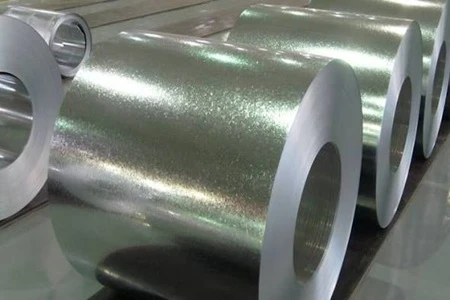
Thickness: 0.3–3.0mm; Width: 914/1000/1219/1250/1500mm.
Surface:
2B: Cold-rolled + bright annealed + smooth, matte and delicate finish, the preferred choice for general use.
BA: Bright annealed, mirror finish, decorative/home appliance.
NO.4: Brushed (short wire), kitchen and bathroom/elevator.
HL: Long brushed, architectural decoration.
8K: Mirror polished, high-end decoration.
3. Pipes (Seamless/Welded Pipes)
Seamless Pipes: Outer diameter 6–530mm, wall thickness 1–50mm, high pressure/chemical/boiler.
Welded Pipes: Outer diameter 8–2000mm, wall thickness 0.5–20mm, decorative/water supply and drainage/structural.
4. Bars/Profiles
Round Bars: Diameter 6–300mm, cold drawn/hot rolled/bright bar.
Angle Steel/Channel Steel/Flat Steel: Structural/support/mechanical parts.
(IV) Core Performance Indicators (Mandatory Inspection for Foreign Trade)
Chemical Composition: Cr, Ni, Mo, C, Mn, Si, S, P (lower S/P ratio is better).
Mechanical Properties: Yield Strength (Rp0.2), Tensile Strength (Rm), Elongation (A), Hardness (HV/HRC).
Corrosion Resistance: Salt Spray Test (NSS/ASS), Pitting Equivalent (PREN=Cr+3.3Mo+16N).
Surface Quality: No scratches, color difference, pinholes, roller marks, or dirt.
Dimensional Tolerances: Thickness/Width/Length Tolerances (according to ASTM A240/EN 10088/GB/T 4237).
(V) Frequently Asked Questions and Risks in Foreign Trade (Key Issues)
1. Material Counterfeiting (Most Frequently Occurring)
Risk: 201 stainless steel being passed off as 304, 304 stainless steel being passed off as 316L, 430 stainless steel being passed off as 304, leading to rust, corrosion, and cracking. Countermeasures:
1. **Risks:** Clearly specify the grade and composition standards in the contract; include an SGS/BV material report with shipment; conduct on-site sampling inspection using a portable spectrometer.
2. **Surface Quality Disputes:**
Risks: Surface scratches, color differences, fingerprints, passivation spots on 2B/BA/NO.4; color differences between different batches.
Countermeasures: Seal samples in advance; agree on surface standards (e.g., ASTM A480); use PVC film + moisture-proof paper + wooden frame for packaging to prevent scratches and moisture.
3. **Thickness/Tolerance Discrepancies:**
Risks: Excessive negative tolerances in cold-rolled steel (e.g., 1.5mm actual thickness 1.4mm); excessive tolerances in hot-rolled steel.
Countermeasures: Specify tolerance ranges in the contract (e.g., ±0.02mm); settle accounts based on theoretical weight/weighing and clearly define; include a thickness test report.
4. **Insufficient Corrosion Resistance:**
Risks: Pitting/rust spots on 304 used in coastal/chemical environments; Mo deficiency or substandard low-carbon content in 316L. Countermeasures: Select the appropriate type based on environment (316L/duplex for marine applications, 304 for general outdoor use); specify salt spray test/PREN value in the contract.
5. Magnetic Misunderstanding
Risk: Customers may use a magnet to judge 304/316L, and the weak magnetism after cold working could lead to misjudgment as counterfeit.
Countermeasure: Explain in advance that austenitic stainless steel will have a weak magnetism after cold working, which can be demagnetized by annealing; refer to the composition report, which states it is non-magnetic.
6. Packaging and Sea Freight Rust
Risk: Unpackaged/poor moisture protection; sea freight salt spray can cause surface rust/water stains.
Countermeasure: Export standard packaging: rolls + waterproof membrane + corner protectors + wooden pallets; PE protective film on boards; container desiccant + sealing.
7. Inconsistent Standards
Risk: Differences between GB/ASTM/EN/JIS standards, resulting in different composition/tolerance/performance requirements.
Solution: The contract should clearly specify the execution standard (e.g., ASTM A240 304/316L); all inspections should be carried out in accordance with the contract standard.