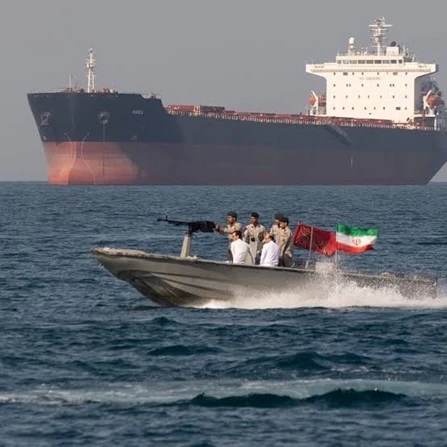
The international landscape in 2026 is characterized by "multiple disruptions and structural divergence." On one hand, geopolitical conflicts have persisted throughout the year: the shipping crisis in the Strait of Hormuz, which erupted early in the year, led to disrupted schedules and soaring insurance premiums for vessels in the Persian Gulf, causing a sharp decline in exports to the Middle East. On the other hand, trade protectionism has intensified; the European Union's Carbon Border Adjustment Mechanism (CBAM) entered its formal levy phase in 2026, while the United States, India, Turkey, and several Southeast Asian nations have simultaneously tightened market access requirements and anti-dumping measures. Consequently, the institutional costs associated with exporting Chinese seamless pipes have risen significantly. Meanwhile, accelerated oil and gas development and pipeline construction in regions such as North Africa and Southeast Asia have created new growth opportunities, driving a shift in the export market structure away from the traditional Middle Eastern stronghold toward these emerging markets.
According to customs data, China's cumulative exports of seamless pipes from January to September 2026 reached 4.5388 million tons-a year-on-year increase of 0.78%-maintaining a trend of "steady growth." However, the structural shifts are far more profound than the aggregate figures suggest: exports to the Middle East fell by 30.92% year-on-year, with their share of the total dropping by 11.8 percentage points. Nigeria and Algeria have emerged as the top two export destinations, and the proportion of drill pipes has increased by more than 6 percentage points. In short, 2026 has seen a dual transition in China's seamless pipe exports: a shift in target markets and an adjustment in product mix. In the following sections, I will analyze the characteristics of China's seamless pipe exports in 2026-examining total volume, structure, and influencing factors-and offer a brief assessment of the export outlook.
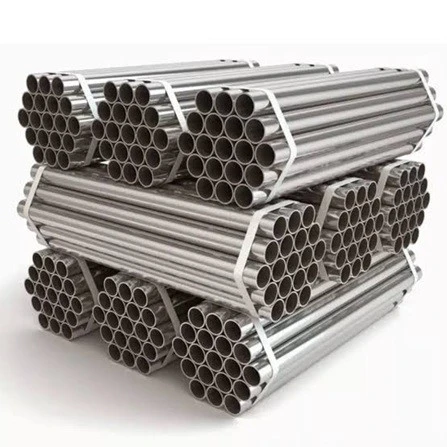
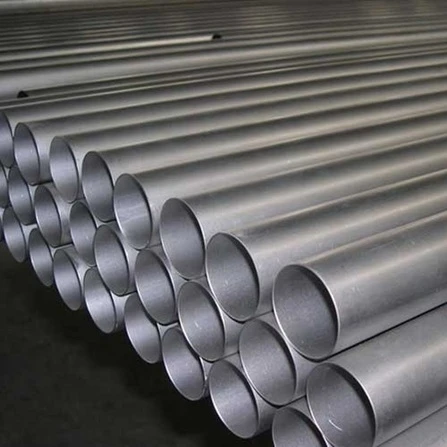
I. Analysis of Total Seamless Pipe Exports
In terms of the operational rhythm, exports in 2026 followed a fluctuating upward trajectory. In January–February, strong demand from the Middle East kept export volumes high. In March, the shipping crisis in the Strait of Hormuz-characterized by disrupted schedules and soaring insurance premiums-led to delivery delays or the rerouting of shipments to other ports, resulting in a monthly decline in exports. From April to June, as alternative shipping routes were established, export volumes gradually recovered. The period from July to September marked the traditional peak season, further bolstered by restocking in North Africa; consequently, exports in September rebounded to 572,500 tonnes-a relatively high level for the year-reflecting positive month-on-month growth for two consecutive months. Compared to the total export volume of 6.2828 million tonnes for the full year of 2025, the volume for the first nine months of 2026 represents 72.2% of that figure-slightly ahead of the 71.7% recorded during the same period in the previous year-indicating that the pace of exports remains well-controlled.
II. Analysis of the Export Structure for Seamless Pipes
1. Breakdown by Product Type
According to customs data, China's cumulative exports of seamless pipes from January to September 2026 reached 4.5388 million tonnes. A breakdown by product type reveals the following: seamless pipes for oil and gas drilling accounted for 1.4926 million tonnes (32.9%); seamless pipes for oil and gas pipelines accounted for 1.1920 million tonnes (26.3%); other seamless pipes accounted for 1.6157 million tonnes (35.6%); boiler pipes accounted for 211,400 tonnes (4.7%); and seamless pipes for geological drilling/casing accounted for 27,100 tonnes (0.6%).
Compared to the product structure for the full year of 2025, the most significant shift occurred between seamless pipes for oil and gas pipelines and those for drilling. In 2025, line pipe exports reached 2.1077 million tonnes, accounting for 33.5% of the total and making it the leading export category. From January to September 2026, this share fell to 26.3%-a decline of 7.2 percentage points. Line pipe is primarily used for the construction of long-distance oil and gas transmission pipelines; therefore, demand is highly dependent on the timing of tenders and the commencement of large-scale pipeline projects in regions such as the Middle East, Central Asia, and South America. In 2026, several pipeline projects in the Middle East saw their tenders delayed due to geopolitical instability and funding issues. Furthermore, sovereign wealth funds in Saudi Arabia and the UAE shifted their investment focus toward domestic refining, petrochemical, and new energy projects, which dampened demand for oil and gas line pipe.
In contrast, the share of drill pipe rose from 26.7% in 2025 to 32.9%-an increase of 6.2 percentage points. Drill pipe is directly linked to oil and gas drilling and extraction activities. Amid high oil prices in 2026, the sector demonstrated resilience; active development of deep and ultra-deep wells-notably in North Africa-drove significant growth in demand for drill pipe.
2. Breakdown by Country
Regarding export destinations, the top 10 countries for Chinese seamless pipe exports accounted for a combined 50.97% of the total from January to September 2026. While this still represents more than half of the market, the level of concentration has declined for two consecutive years-down from 52.45% in 2025 and 55.87% in 2024-indicating that the export market is becoming increasingly diversified.
Compared to 2024–2025, there have been notable shifts in the rankings. The United Arab Emirates (UAE) ranked first in 2024 and 2025, with export volumes of 524,900 tonnes and 680,700 tonnes, respectively. However, from January to September 2026, exports to the UAE fell by 59.19% year-on-year to 213,700 tonnes, causing it to drop to seventh place. Kuwait, which held the second position in 2025 (514,600 tonnes), fell out of the top ten entirely, with exports reaching 140,300 tonnes for the first nine months of 2026-a year-on-year decline of 53.34%. Saudi Arabia's exports stood at 98,700 tonnes, down 34.85% year-on-year. A collective decline in exports to key oil-producing nations in the Middle East stands out as the most significant trend in China's seamless pipe exports during 2026.
Taking their place are countries in North Africa and Southeast Asia. From January to September 2026, Nigeria became the top destination for Chinese seamless pipe exports, receiving 314,600 tonnes (a 6.93% share). Algeria followed closely with 298,400 tonnes (6.58%); both nations reached the top two spots for the first time. In Southeast Asia, Thailand, Vietnam, and Indonesia saw export volumes of 215,800 tonnes, 172,200 tonnes, and 207,400 tonnes, respectively-reflecting stable or slightly growing demand. Meanwhile, India remained firmly in third place with 257,200 tonnes, underscoring the resilience of demand for seamless pipes in North Africa and Southeast Asia.
III. Factors Influencing Seamless Pipe Exports in 2026
(1) Impact of Middle East Conflicts
In March, the shipping crisis in the Strait of Hormuz emerged as the most critical turning point of the year. Disruptions to passage through the Strait, combined with rising insurance premiums and the costs associated with rerouting vessels, caused freight rates to double. Consequently, some existing contracts were either defaulted upon or diverted to other ports, leading to a sharp decline in Chinese exports to the Middle East. Looking at the cumulative data, China's exports of seamless pipes to 16 Middle Eastern countries from January to September 2026 totaled 1.1641 million tons-a decline of 30.92% (or 521,300 tons) compared to the 1.6851 million tons recorded during the same period in 2025. The share of total exports to this region fell from 37.4% to 25.6%, a decrease of 11.8 percentage points. However, data for September showed a marginal improvement. Exports to the Middle East that month reached 152,800 tons, with notable month-on-month growth in several countries: Oman (+87.62%), Egypt (+291.40%), the UAE (+28.27%), Kuwait (+298.02%), and Qatar (+1178.42%)-all clear signs of inventory replenishment and accelerated project execution. This is partly due to the gradual restoration of passage through the straits in the fourth quarter, which facilitated the concentrated delivery of previously delayed orders.
(2) Surge in Demand for Seamless Pipes in North Africa
North Africa has emerged as the primary beneficiary of the current shift in export structure. From January to September 2026, China exported 314,600 tons to Nigeria, 298,400 tons to Algeria, and 153,000 tons to Egypt. Together, these three countries accounted for 766,000 tons-representing 16.9% of China's total seamless pipe exports-a volume equivalent to nearly two-thirds of the Middle Eastern market. Nigeria and Algeria ranked as the top two export destinations, while exports to Egypt grew by 64.74% year-on-year.
The primary drivers for this surge in demand are: 1. An upward cycle in oil and gas investment. In Nigeria, the development of deep-water blocks and integrated refining-petrochemical projects-under the framework of the Petroleum Industry Act-has fueled demand for oil-country tubular goods (OCTG), including casing and line pipe, particularly in connection with the Dangote refinery and its associated terminals and pipelines. Meanwhile, Algeria's national oil company, Sonatrach, has increased investment in the development of southern gas fields and the maintenance of export pipelines, leading to steady procurement of high-grade line pipe. 2. A period of intensive infrastructure development. Projects such as the North-South water transfer scheme in Algeria, the development of new cities and the upgrading of utility pipeline networks in Egypt, and housing and power infrastructure initiatives in Nigeria have all generated substantial demand for structural and fluid-conveyance pipes. 3. The "pull" effect of Chinese EPC (Engineering, Procurement, and Construction) contracts: As Chinese enterprises-including CNPC and Sinopec-undertake oil and gas field surface infrastructure, refining, and pipeline projects in North Africa, the associated demand for piping leads to concurrent exports, creating a stable source of orders. 4. Shifts in the competitive landscape: European and Japanese suppliers, constrained by shrinking production capacity and rising carbon-related costs, have seen their price competitiveness in the North African market decline.
IV. Outlook for Seamless Pipe Exports
Based on export performance from January to September, production scheduling for the fourth quarter, and the broader international landscape, China's seamless pipe exports are projected to reach approximately 6.3 million tonnes in 2026, maintaining a steady growth trend. By 2027, export volume is expected to rise further to 6.4 million tonnes, representing a year-on-year increase of 1.6%.