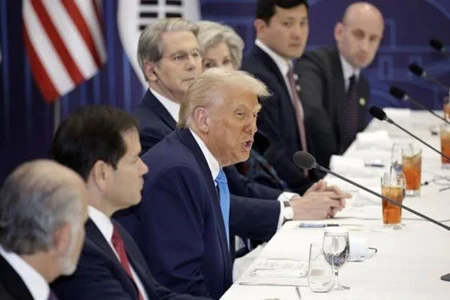
Recently, the US suspension of military strikes against Iran has drawn international attention. Some US media outlets reported that one reason the Trump administration halted further airstrikes might be related to a depletion of US air defense interceptor munitions, particularly the need to replenish Patriot missile systems. However, the US denied this, emphasizing that the suspension was primarily to create space for diplomatic negotiations. So, is the US suspension of airstrikes against Iran due to military resource constraints, or is it a strategic adjustment in response to the Middle East situation?
According to reports, since the US-Israel joint military operation against Iran, the US military has continuously conducted airstrikes in the Middle East, resulting in a certain number of casualties. US Ambassador to the UN, Waltz, stated that Trump's decision to suspend military action was aimed at de-escalating the situation through diplomatic channels. Recently, the US, Iran, and Oman have maintained multi-level communication, and related negotiations are underway. US officials believe that the current situation still presents a possibility for resolving the dispute through diplomatic means.
Meanwhile, US media, citing sources, reported that prolonged high-intensity US military operations could lead to a depletion rate of precision-guided weapons and air defense resources exceeding replenishment rates, with the Patriot missile inventory becoming a focal point. However, the US government denied halting operations due to a "lack of ammunition," stating that the US military possesses sustained combat capabilities and that the suspension of airstrikes was primarily to prevent further escalation of the conflict.


From a regional perspective, both the US and Iran have recently released signals of de-escalation. Iran stated that after the US ceased airstrikes, its reciprocal strikes against the US were also temporarily suspended, emphasizing that its current strategy is one of "retaliatory deterrence." However, Iran also warned that if Israel continues to push for military escalation, the regional conflict could escalate again. Iran's top leadership also stated that it will continue to adhere to its established strategic line and maintain relations with regional allies.
On the other hand, Israeli Prime Minister Netanyahu maintains a hardline stance. He stated that weakening the current Iranian regime or abandoning its nuclear program is one of the key conditions for ending the war. During his visit to the US, Netanyahu hopes to gain further insight into the Trump administration's future policy towards Iran, and the US's final decision could be a crucial factor influencing the direction of the Middle East situation. For global markets, the development of the US-Iran conflict not only involves regional security but may also affect energy supplies, international transportation, and the global supply chain layout of enterprises. In particular, key trade routes such as the Strait of Hormuz could see increased international trade costs and market uncertainty should the situation escalate.
Whether US-Iran relations have entered a new phase of negotiations remains to be seen. Future changes in US policy, Israeli actions, and Iranian responses will all be important variables influencing the situation in the Middle East.