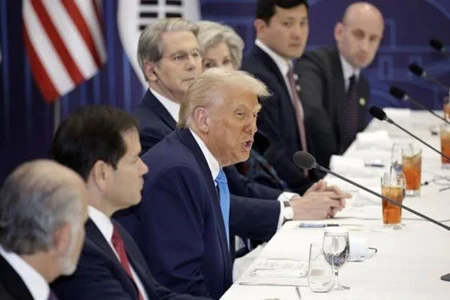
On July 27th local time, US-Iran relations once again became the focus of international attention. US President Trump stated that US-Iran negotiations were "going well" and revealed that Iran was willing to reach an agreement, while warning that the US might restart military action if diplomatic efforts failed. However, Iran subsequently responded, stating that no formal negotiations had taken place with the US and that the Strait of Hormuz remained closed. These differing signals from both sides have raised new concerns about the future direction of the Middle East situation, energy transport security, and the stability of global supply chains.
From the perspective of international trade and global logistics, the changing tensions between the US and Iran have transcended regional security, directly impacting energy markets and international shipping. The Strait of Hormuz, as a vital global energy transport route, handles a large volume of oil and gas shipments daily. Continued escalation in the region could lead to increased shipping risks, higher transportation costs, and further impact on the global energy supply system. Therefore, market participants, including energy companies, manufacturing enterprises, and cross-border trading companies, are closely monitoring the developments in US-Iran relations.


Trump stated that the US is willing to allow more time for diplomatic negotiations, adding that the US might resume military action if a new ceasefire agreement cannot be reached. Reports indicate that current diplomatic efforts are primarily focused on the relationship between Iran and Oman, with Qatar, Pakistan, and Egypt also involved. The US hopes to use negotiations to restore navigation in the Strait of Hormuz and restart diplomatic discussions on issues such as the nuclear agreement.
However, Iran has not responded positively to the US statement. Iranian Foreign Ministry spokesman Bagaei stated that Iran is not currently engaging in any negotiations with the US, and related talks are mainly focused on discussing shipping management and security mechanisms in the Strait of Hormuz with Oman. He emphasized that Iran will prioritize safeguarding its national interests and will not allow external forces to dictate the regional situation. Meanwhile, the Iranian military has stated that it will continue to enhance its military capabilities during the ceasefire period, accelerate missile production, improve weapon accuracy, and strengthen its overall defense system to address potential future security challenges.
Analysts believe that while both the US and Iran have released some diplomatic signals, the underlying contradictions between them have not been truly resolved. The US suspension of military operations may be related to the military pressure, economic impact, and energy market volatility stemming from the ongoing conflict; while Iran hopes to enhance its strategic advantage in future negotiations by strengthening its military capabilities. Currently, significant differences remain between the two sides on core issues such as the opening of the Strait of Hormuz, regional security, and the nuclear issue, making a comprehensive de-escalation in the short term a considerable challenge.
For global trading companies, the developments in the US-Iran situation warrant close monitoring. If the two sides can ease tensions through diplomatic channels, it will help reduce international energy price volatility and shipping risks, promoting the stabilization of global supply chains. However, if negotiations fail and the regional conflict escalates again, it could further impact crude oil transportation, international logistics costs, and the supply chain layout of multiple industries. In the future, the development of US-Iran relations will not only affect the security landscape of the Middle East but may also become a significant factor influencing the global trade environment.