Chinese Customs Sends Positive Signals: Foreign Trade Resilience and Industrial Advantages Become Important Supports for Enterprises in Coping with Global Market Changes
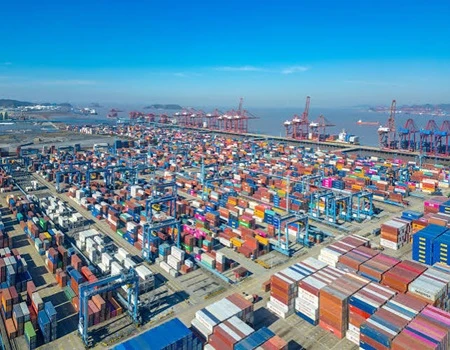
On July 14, the State Council Information Office held a press conference. Wang Jun, Deputy Director of the General Administration of Customs, stated that China's foreign trade development achieved significant results in the first half of this year. Although the current international economic environment still faces many uncertainties, the overall trend shows that the foundation for China's foreign trade development remains solid, and the positive development trend is expected to continue in the second half of the year.
From the perspective of the global market environment, international trade growth is facing certain pressures. The World Bank points out that global economic growth expectations have weakened due to factors such as rising energy prices, increased inflationary pressures, and tightening monetary policy. The International Monetary Fund (IMF) predicts that global economic growth this year will decline from 3.5% last year to around 3%, while the growth rate of global trade in goods and services may also slow from 5% last year to 3.5%.


Against the backdrop of weaker-than-expected global demand recovery and a complex and changing trade environment, Chinese foreign trade enterprises are facing new challenges, including fluctuations in overseas market demand, supply chain adjustments, and intensified international competition. However, industry insiders believe that China's long-standing advantages in the industrial chain, its continuously improving technological innovation capabilities, and its expanding openness are providing crucial support for the stable development of foreign trade.
In recent years, Chinese enterprises have actively promoted product upgrading and market diversification, shifting from traditional manufacturing exports to exports of high-tech, high-value-added products. The export performance of new energy equipment, intelligent manufacturing products, electronic information products, and green and low-carbon related industries continues to attract attention. Meanwhile, more and more foreign trade enterprises are enhancing their competitiveness in the international market through digital marketing, cross-border e-commerce, and overseas localization.
For foreign trade enterprises, the global trade environment remains uncertain in the second half of the year, but China's dynamic economic operation, complete industrial system, stable supply capacity, and enhanced innovation capabilities will continue to help enterprises withstand external risks. Especially for export enterprises reliant on international markets, optimizing supply chain management, enhancing product competitiveness, and expanding into emerging markets will be important directions for future growth opportunities.
In the long term, the global trade landscape is undergoing rapid adjustments, and the core competitiveness of China's foreign trade development is shifting from scale advantages to quality advantages. With continued policy support and the ongoing improvement of enterprises' internationalization capabilities, China's foreign trade is expected to maintain a stable growth trend, contributing more to global supply chain cooperation and economic recovery.
For overseas buyers and international partners, the Chinese market still possesses strong supply stability and industrial synergy capabilities. In the future, Chinese foreign trade enterprises will continue to seek new growth opportunities in global market competition, creating more possibilities for international trade cooperation.