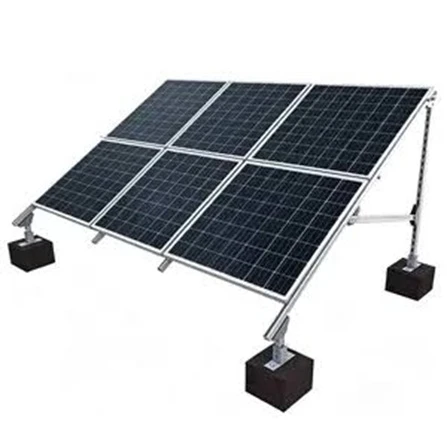
A solar mounting bracket system typically consists of a base structure, purlins or rails, and connecting hardware, all manufactured from hot-dip galvanized steel or aluminum alloy. The choice of material and coating directly determines how long the structure will hold up against corrosion, especially for ground-mounted systems exposed to rain, humidity, and soil contact.
What Makes Solar PV Mounting Brackets Different From Standard Steel Structures?
The main distinction of a solar mounting bracket is that it is designed to hold a specific load - the panels, plus wind and snow load - for the full lifespan of a solar installation, which is usually 25 years or more. This is very different from general-purpose steel framing, which is not engineered against a defined load calculation.
For a buyer comparing structural options, this matters. Standard carbon steel angle or channel offers a lower material cost, but without proper hot-dip galvanizing it will not survive long-term outdoor exposure, particularly in coastal or high-humidity regions. Aluminum alloy brackets offer excellent corrosion resistance and lighter weight, which reduces transport and installation cost, but the material cost per ton is considerably higher than steel. Pre-galvanized steel purlins, our most commonly supplied option, sit in a practical middle ground - a zinc coating of 275g/m² or higher provides strong corrosion protection while keeping material cost manageable for utility-scale and commercial rooftop projects.


How Should You Compare Different Mounting Bracket Options?
A useful comparison starts with the installation type rather than the material name alone.
|
Structure Type |
Main Characteristic |
Typical Advantage |
Consideration |
|
Hot-Dip Galvanized Steel Bracket |
Steel base with zinc coating applied after fabrication |
Strong corrosion resistance, cost-effective for large projects |
Coating thickness must match site exposure |
|
Aluminum Alloy Bracket |
Extruded or fabricated aluminum |
Lightweight, naturally corrosion resistant |
Higher material cost per ton |
|
Pre-Galvanized Steel Purlin |
Coil galvanized before roll-forming |
Fast lead time, consistent coating |
Cut edges need additional protection |
|
Uncoated Carbon Steel |
Raw steel structure |
Lowest initial cost |
Requires field painting, shorter service life |
For utility-scale ground-mount projects, hot-dip galvanized steel is generally the most cost-effective choice at scale. For rooftop projects where weight matters, or coastal projects with severe salt exposure, aluminum becomes more attractive despite the higher unit cost. The right choice depends on the installation environment and project scale rather than one material being universally best.
Where Are Solar PV Mounting Brackets Actually Used?
The application range of solar mounting structures covers most major installation types in the solar industry.
For utility-scale ground-mount solar farms, galvanized steel piles, purlins, and bracing systems form the structural backbone that supports thousands of panels across large open sites, often installed with pile-driven or screw-pile foundations depending on soil condition.
For commercial and industrial rooftop systems, lighter aluminum or galvanized steel rail systems are used, designed to distribute load evenly across the existing roof structure without exceeding the building's load capacity.
For residential rooftop installations, smaller aluminum rail and clamp systems are common, prioritizing ease of installation and a clean visual appearance.
For floating solar (floating PV) systems, a growing segment particularly in Southeast Asia and parts of South America, corrosion-resistant aluminum or specially coated steel structures are combined with buoyant platforms, where corrosion resistance requirements are even more demanding due to constant water contact.
The important point is that a bracket specification suited to a dry inland ground-mount site is not automatically suitable for a coastal or floating installation. Coating type and thickness should always be selected according to the actual site condition, not a generic standard.
Which Specifications Matter Before Ordering Solar Mounting Brackets?
When we receive a solar mounting bracket enquiry, the first details we look for are: structure type (ground-mount, rooftop, or floating), material (galvanized steel or aluminum), zinc coating thickness for steel, profile dimensions, wind and snow load requirements for the project site, and total tonnage or panel count.
Material selection determines the baseline corrosion resistance. Zinc coating thickness for hot-dip galvanized steel is usually specified in g/m², with coastal or high-humidity projects typically requiring a heavier coating than inland dry-climate sites. Wind and snow load requirements are project-specific and are usually derived from local design codes, which affects the structural profile thickness needed.
For a quotation, we normally recommend sending:
Structure Type + Material + Coating Spec + Profile Dimensions + Project Location + Load Requirement + Quantity
If the buyer does not yet have engineering drawings finalized, a project location and expected system capacity (in MW or panel count) is usually enough for an initial technical discussion and budget quotation.
What Have We Learned From Supplying Solar Mounting Brackets Overseas?
In our experience as a China based steel trading company, many solar mounting bracket enquiries start with a request for "steel brackets for solar panels" and a target price, without project-specific engineering details.
For example, one overseas EPC contractor originally requested a standard galvanized bracket specification for a ground-mount project without providing local wind load data. Instead of quoting a generic standard item, our export team asked for the project's regional wind speed classification and soil type before finalizing the profile thickness and foundation type. The final specification required a slightly heavier gauge than the buyer's initial assumption, but it meant the structure met local code requirements without a costly redesign after materials had already shipped.
Another repeat customer, a solar installer working across multiple project sites, standardized on a single coating specification and profile dimension across all their projects to simplify inventory management and reduce lead time variability. We now maintain their approved specification as a standing reference for repeat orders, which shortens the quotation cycle considerably compared to a fresh enquiry each time.
These experiences have shaped how we handle solar mounting bracket orders. A lower unit price on paper can become far more expensive if the coating specification does not match the installation environment, or if the structural profile does not meet the project's actual load requirements.
Why Does This Matter for International Solar Buyers?
For overseas buyers, solar mounting brackets should be evaluated as part of a complete structural solution rather than a simple steel purchase. The final result depends on accurate load calculation, correct coating specification for the site environment, packaging suited to long-distance shipping, and consistent quality across a large batch order.
We support buyers with specification confirmation, sourcing, order coordination, inspection arrangements, and export packing. For EPC contractors managing multiple projects, we can work from a standardized specification for repeat orders. For new projects, we can review site conditions and load requirements before finalizing a quotation.
The product itself is straightforward engineering. The purchasing process does not need to be complicated.
If you are sourcing solar PV mounting brackets for a ground-mount, rooftop, or floating solar project, send us your structure type, material preference, coating specification, project location, and load requirement. We can review the requirement and prepare a quotation based on the actual project conditions rather than a generic product name.