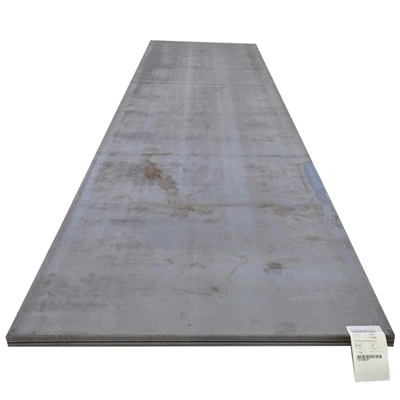
Hey there! As a hot rolled steel supplier, I often get asked about the difference between hot rolled steel and cold rolled steel. It's a pretty common question, and understandably so. Both types of steel have their own unique characteristics and uses, so it's important to know which one is right for your project. In this blog post, I'll break down the differences between hot rolled and cold rolled steel, and help you figure out which one is the best fit for you.
What is Hot Rolled Steel?
Let's start with hot rolled steel. This type of steel is made by heating a large billet or slab of steel above its recrystallization temperature, which is typically around 1,700°F (926°C). Once the steel is heated to this temperature, it's passed through a series of rollers to reduce its thickness and shape it into the desired form. This process is called hot rolling.
One of the main advantages of hot rolled steel is its cost-effectiveness. Because the steel is heated to such a high temperature, it's easier to work with and requires less energy to shape. This makes it a popular choice for large-scale projects, such as construction and manufacturing.
Another advantage of hot rolled steel is its strength. The high temperature and pressure used in the hot rolling process help to align the steel's grains, which gives it a stronger and more uniform structure. This makes it ideal for applications that require high strength and durability, such as bridges, buildings, and heavy machinery.
However, hot rolled steel does have some drawbacks. One of the main issues is its surface finish. Because the steel is heated and rolled at high temperatures, it tends to develop a rough, scaly surface. This can make it difficult to paint or coat, and may require additional finishing processes to achieve a smooth, even surface.
What is Cold Rolled Steel?
Now, let's talk about cold rolled steel. This type of steel is made by taking hot rolled steel and further processing it at room temperature. The steel is passed through a series of rollers to reduce its thickness and improve its surface finish. This process is called cold rolling.
One of the main advantages of cold rolled steel is its smooth, uniform surface finish. Because the steel is rolled at room temperature, it doesn't develop the rough, scaly surface that hot rolled steel does. This makes it ideal for applications that require a high-quality finish, such as automotive parts, appliances, and furniture.
Another advantage of cold rolled steel is its dimensional accuracy. The cold rolling process allows for more precise control over the thickness and shape of the steel, which makes it easier to work with and ensures a consistent product. This makes it a popular choice for applications that require tight tolerances, such as precision machinery and electronics.
However, cold rolled steel is generally more expensive than hot rolled steel. The additional processing required to cold roll the steel adds to the cost, and the smaller production volumes also contribute to the higher price.
Key Differences between Hot Rolled and Cold Rolled Steel
Now that we've covered the basics of hot rolled and cold rolled steel, let's take a closer look at the key differences between the two.
Surface Finish
As mentioned earlier, hot rolled steel has a rough, scaly surface finish, while cold rolled steel has a smooth, uniform surface finish. This makes cold rolled steel a better choice for applications that require a high-quality finish, such as automotive parts and appliances.
Dimensional Accuracy
Cold rolled steel is generally more dimensionally accurate than hot rolled steel. The cold rolling process allows for more precise control over the thickness and shape of the steel, which makes it easier to work with and ensures a consistent product.
Strength
Hot rolled steel is generally stronger than cold rolled steel. The high temperature and pressure used in the hot rolling process help to align the steel's grains, which gives it a stronger and more uniform structure. However, cold rolled steel can be made stronger through additional processing, such as heat treatment.
Cost
Hot rolled steel is generally less expensive than cold rolled steel. The additional processing required to cold roll the steel adds to the cost, and the smaller production volumes also contribute to the higher price.
Applications of Hot Rolled and Cold Rolled Steel
Now that we've covered the differences between hot rolled and cold rolled steel, let's take a look at some of the common applications for each type of steel.


Hot Rolled Steel
- Construction: Hot rolled steel is commonly used in construction projects, such as bridges, buildings, and pipelines. Its high strength and durability make it ideal for these applications.
- Manufacturing: Hot rolled steel is also used in manufacturing applications, such as heavy machinery and equipment. Its cost-effectiveness and ease of processing make it a popular choice for these industries.
- Automotive: Hot rolled steel is used in the automotive industry for a variety of applications, such as frames, axles, and suspension components. Its high strength and durability make it ideal for these applications.
Cold Rolled Steel
- Automotive: Cold rolled steel is commonly used in the automotive industry for a variety of applications, such as body panels, doors, and hoods. Its smooth surface finish and dimensional accuracy make it ideal for these applications.
- Appliances: Cold rolled steel is also used in the appliance industry for a variety of applications, such as refrigerators, washing machines, and dryers. Its smooth surface finish and dimensional accuracy make it ideal for these applications.
- Furniture: Cold rolled steel is used in the furniture industry for a variety of applications, such as chairs, tables, and cabinets. Its smooth surface finish and dimensional accuracy make it ideal for these applications.
Our Hot Rolled Steel Products
As a hot rolled steel supplier, we offer a wide range of hot rolled steel products to meet the needs of our customers. Some of our popular products include:
- Hot Rolled Carbon Steel Sheet: This type of steel is commonly used in construction and manufacturing applications. It has a high strength and durability, and is available in a variety of thicknesses and widths.
- Hot Rolled H Beam: This type of steel is commonly used in construction projects, such as bridges and buildings. It has a high strength and durability, and is available in a variety of sizes and shapes.
- Hot Rolled Mild Steel Plate: This type of steel is commonly used in manufacturing applications, such as heavy machinery and equipment. It has a high strength and durability, and is available in a variety of thicknesses and widths.
Conclusion
In conclusion, hot rolled and cold rolled steel are both important types of steel with their own unique characteristics and uses. Hot rolled steel is generally more cost-effective and stronger, while cold rolled steel has a smoother surface finish and better dimensional accuracy. When choosing between the two, it's important to consider the specific requirements of your project and choose the type of steel that best meets your needs.
If you're interested in learning more about our hot rolled steel products or have any questions about the difference between hot rolled and cold rolled steel, please don't hesitate to contact us. We'd be happy to help you find the right steel for your project.
References
- American Iron and Steel Institute. (n.d.). Hot Rolled Steel. Retrieved from https://www.steel.org/
- Steel Manufacturing Processes. (n.d.). Retrieved from https://www.engineeringtoolbox.com/steel-manufacturing-processes-d_1364.html
- What is Cold Rolled Steel? (n.d.). Retrieved from https://www.thefabricator.com/thefabricator/article/metals/what-is-cold-rolled-steel